To view a quicktime video, choose "small" for 240 x 180 or 240 x 135 pixels or "large" for 320 x 240 or 320 x 180 pixels. The streaming videos require the QuickTime 5 plug-in (or better). If necessary, please visit www.apple.com/quicktime/download/ to update your version. Check our help guide if you have trouble.
The quality of the video depends on the speed of your connection to the Internet. The length of each video is given in minutes and seconds (mm:ss). We appreciate your comments about each of the videos.
Barnacle, Balanus improvisus [0:22]
Video by Adam Frederick, Maryland Sea Grant
video |
comments
Barnacles grow on pilings, boats, rocks, and even other animals. They have hard outer plates that, once submersed, open to reveal featherlike legs called cirri, that whisk plankton from the water column into an internal cavity. This very short video shows the barnacle feeding.
Hooked Mussel, Ischadium recurvum [1:47]
Video by Adam Frederick, Maryland Sea Grant
video |
comments
Attached to rocks and other surfaces by fine fibers called byssal threads, hooked mussels open their shells during high tide to draw in water and filter out food particles over their gills. The hooked mussel grows prolifically on oyster reefs, often outnumbering the oysters themselves by several fold. Although the filtration capacity of the hooked mussel has not been calculated directly, the combined filter power of the oyster and hooked mussel together can be quite significant. This video shows the hooked mussel feeding and mud worms that live nearby.
Dark False Mussel, Mytilopsis leucophaeata [8:01]
Video by the Magothy River Association
(used with permission)
video |
comments
Often mistaken for the invasive zebra mussel, dark false mussels are native to the Chesapeake Bay. In the summer of 2004, a population explosion of dark false mussels in the Magothy, Severn and South rivers on the Bay's western shore cleared local waters with its filtering power. The mussel attached itself to pilings, boats, cages, ropes, and every other hard surface it encountered. This video chronicles a large-scale community science initiative, led by Richard Carey of the Magothy River Association, to survey the size of populations in 2004 and to calculate how much water they could filter.
Parchment Worm, Chaetopterus variopedatus [1:10]
Video by Adam Frederick, Maryland Sea Grant
video |
comments
One of only a few true filter-feeding worms in the Bay, the parchment worm feeds on suspended organic material. The video shows the parchment worm in the laboratory, outside the tube that it creates to live in, so we can see its anatomy and feeding structures. Winglike notopodia pump sea water through its tube and the notopodia secrete mucus that is drawn back, forming a bag. The mucus bag filters the water to retain finer particles. Periodically, the particles are transported back to the mouth by the dorsal ciliated groove and ingested.
Oyster, Crassostrea virginica [0:43]
Video by the Chesapeake Bay Foundation
(on YouTube)
video |
comments
Still the go-to filter feeder in the Bay, this native oyster can process water at rates 2-3 times that of other bivalves. Beating cilia draw water over the gills where plankton and other particles are trapped in mucus and sent to the mouth. Follow the link to see this video on YouTube, from the Chesapeake Bay Foundation, which shows time-lapse photography of the capacity of oysters to clear the water.
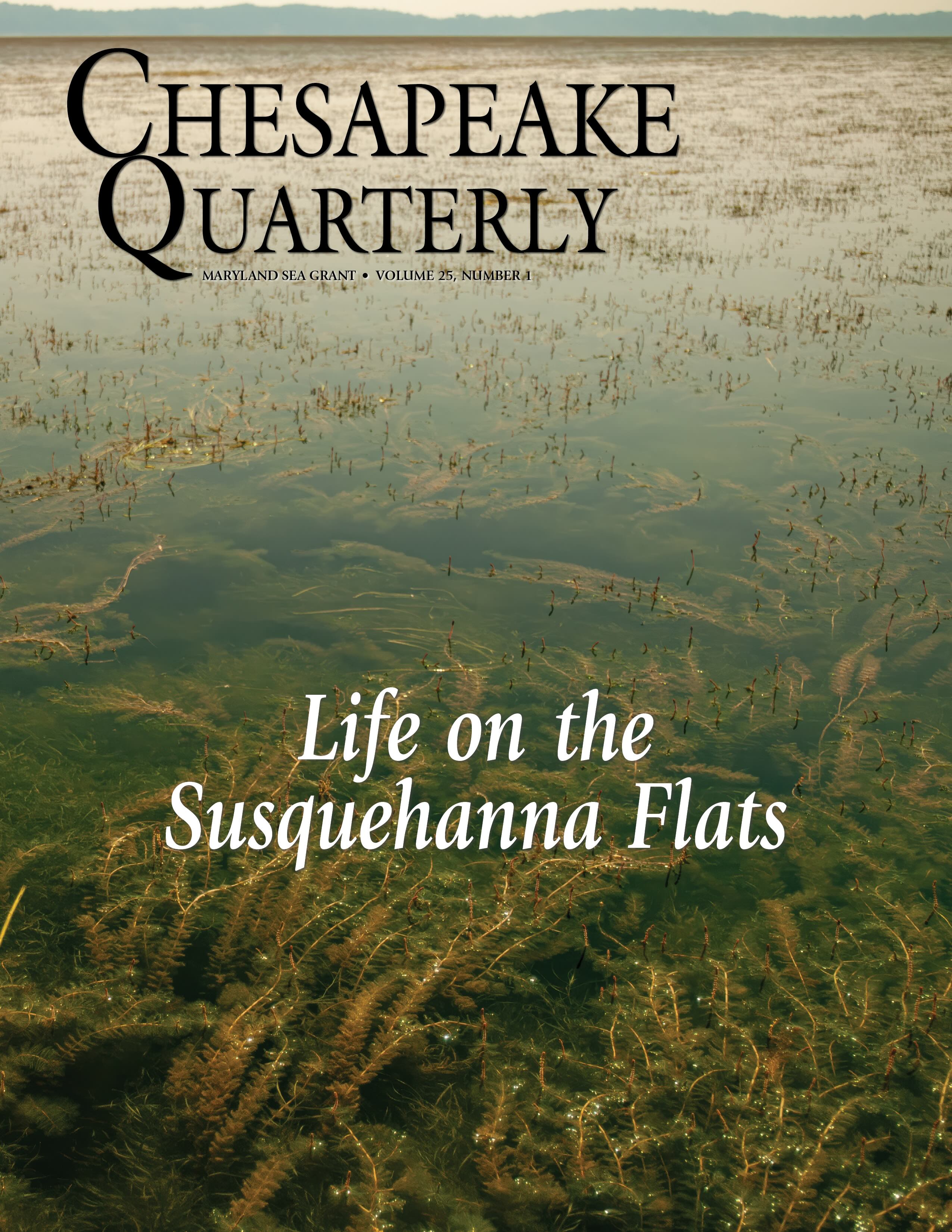
Chesapeake Quarterly : Volume 25 Number 1 : Life on the Susquehanna Flats
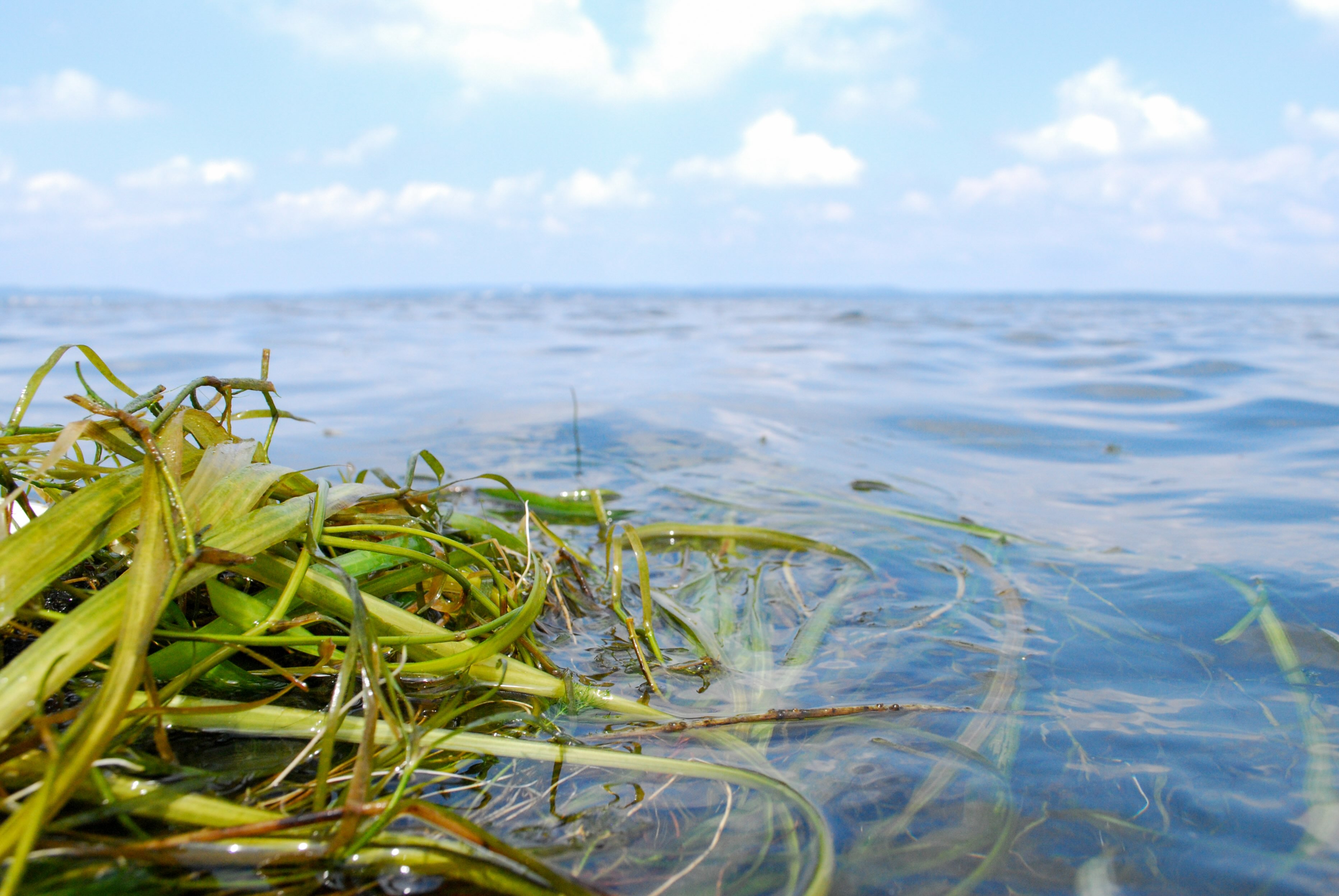
The Susquehanna Flats are one of the Chesapeake’s most remarkable places. Home to the Bay’s largest expanse of submerged grasses, this vital habitat supports wildlife, water quality, and generations of waterfowl hunters. But when Tropical Storm Agnes swept through the watershed in the 1970s, the grass bed virtually disappeared. This story traces decades of loss and recovery on the Susquehanna Flats and their enduring value to the people and wildlife of the region.
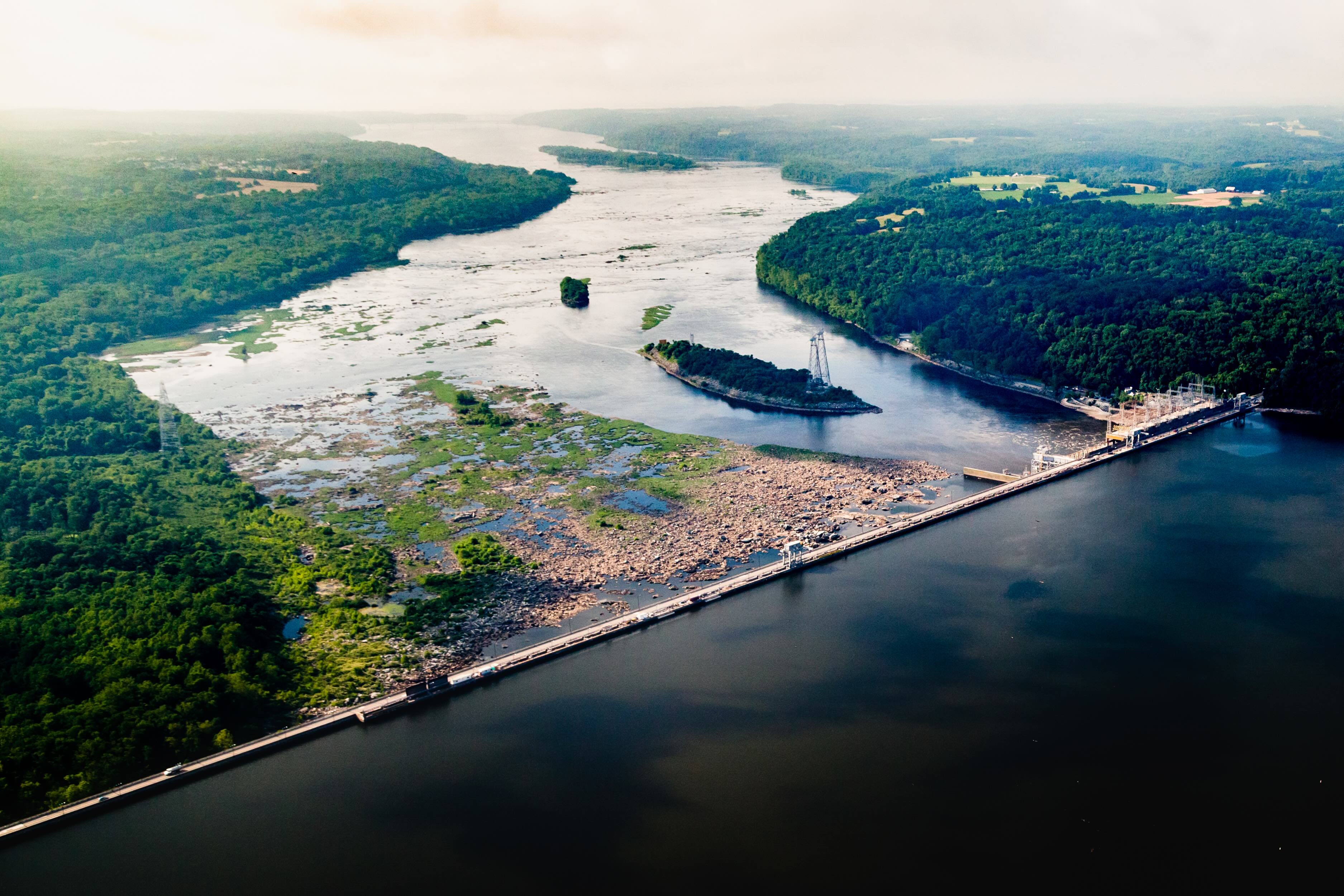
The Conowingo Dam lies 10 miles up the Susquehanna River from the Chesapeake Bay. Behind the dam, a 9,000-acre reservoir has been steadily filling with sediments, which flow over the dam and into the Bay during heavy storms and floods. Researchers are studying the dam’s impact on the Chesapeake Bay, as well as the role of the Susquehanna Flats in filtering these flows.
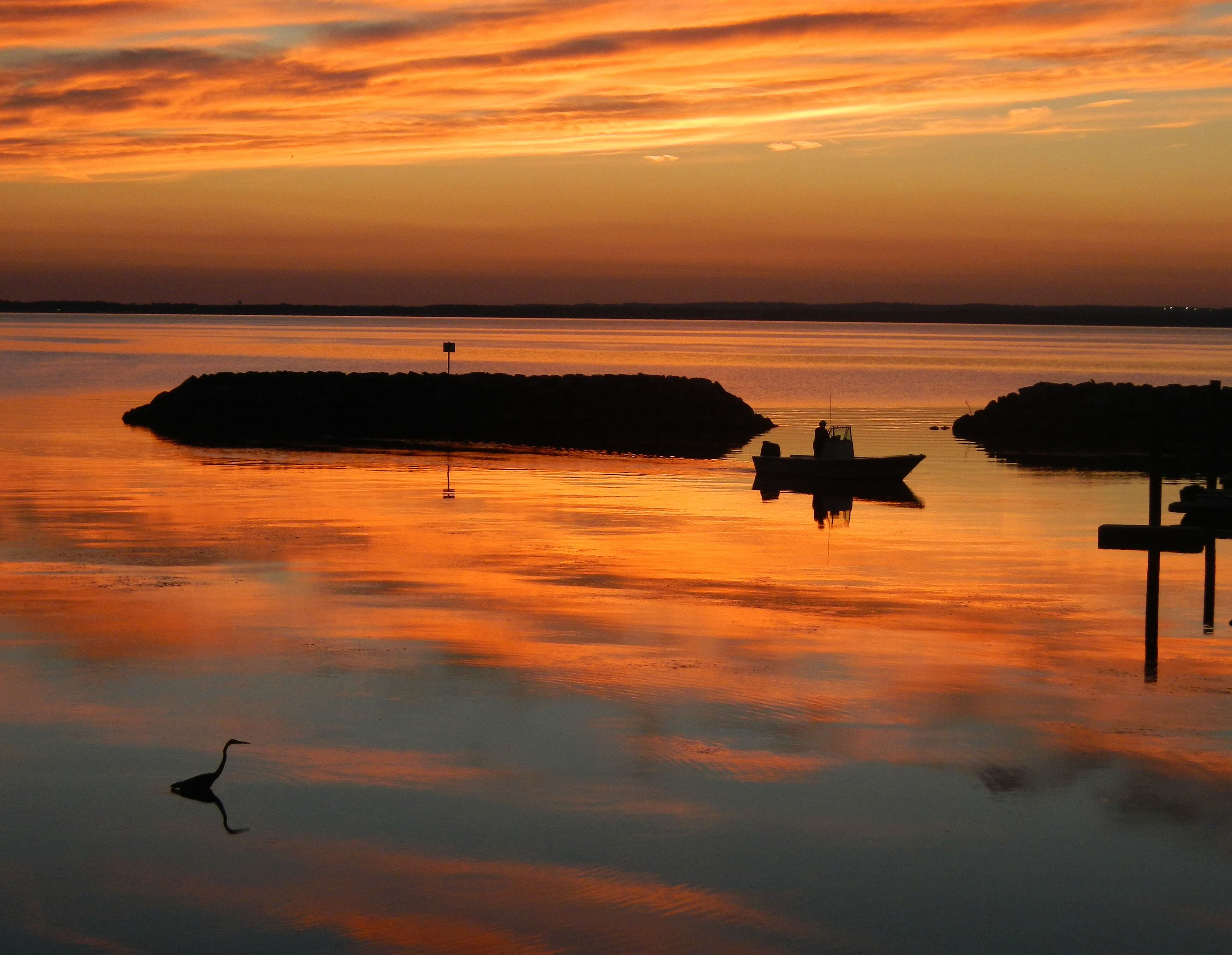
Until the mid-1900s, fishermen in the Susquehanna Flats area hauled in immense catches of native river herring, shad, and striped bass. Today, the commercial harvest is dominated by an invasive species, the blue catfish. Explore the storied history of commercial fisheries in the upper Bay.
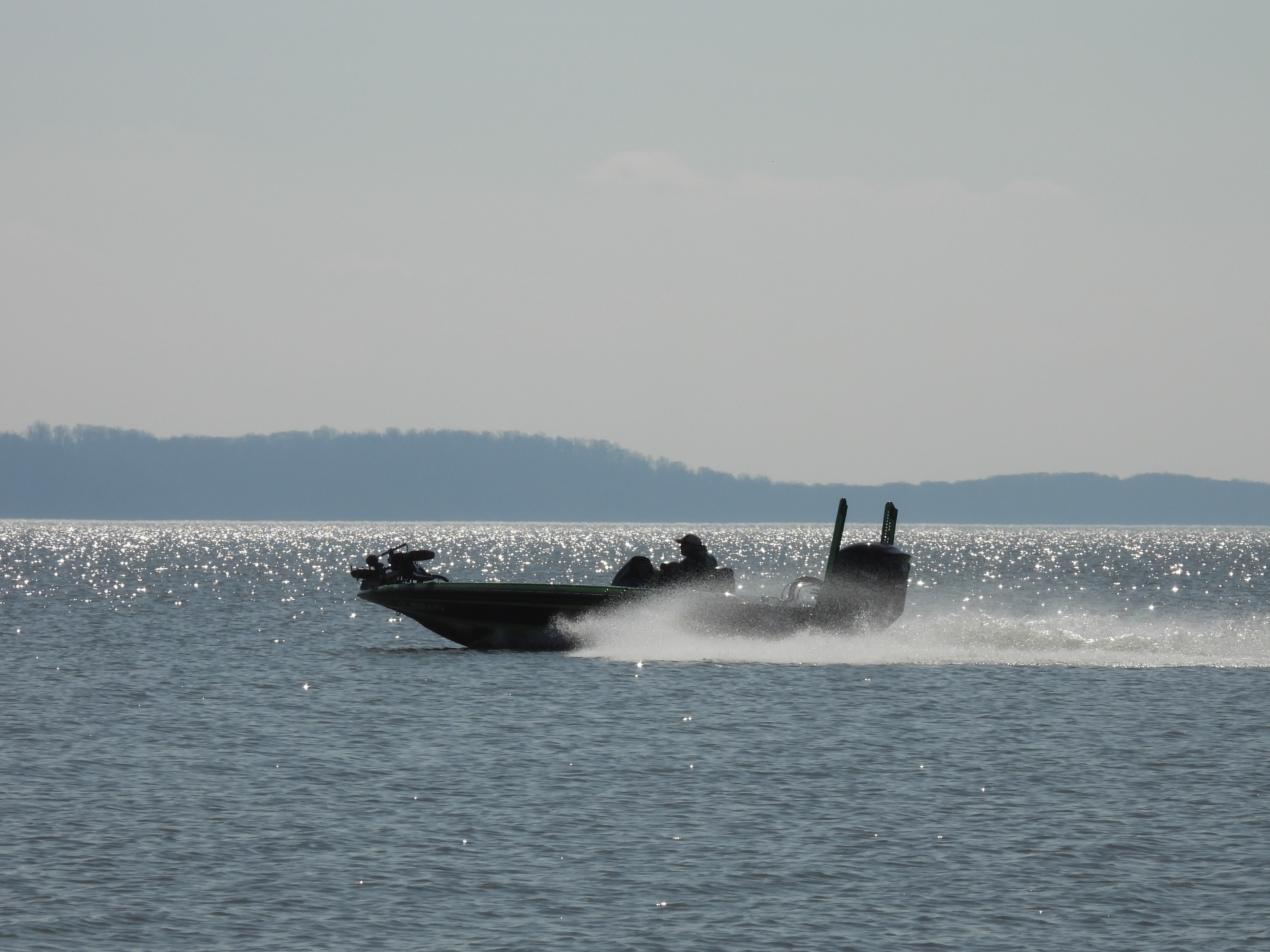
Fishing enthusiasts flock to the Susquehanna Flats to pursue a range of species from striped bass to snakehead. The Flats play host to year-round fishing and hundreds of tournaments. “It’s about more than catching fish,” says one angler.



![[Maryland Sea Grant]](/images/uploads/siteimages/CQ/MD-Logo.png)